


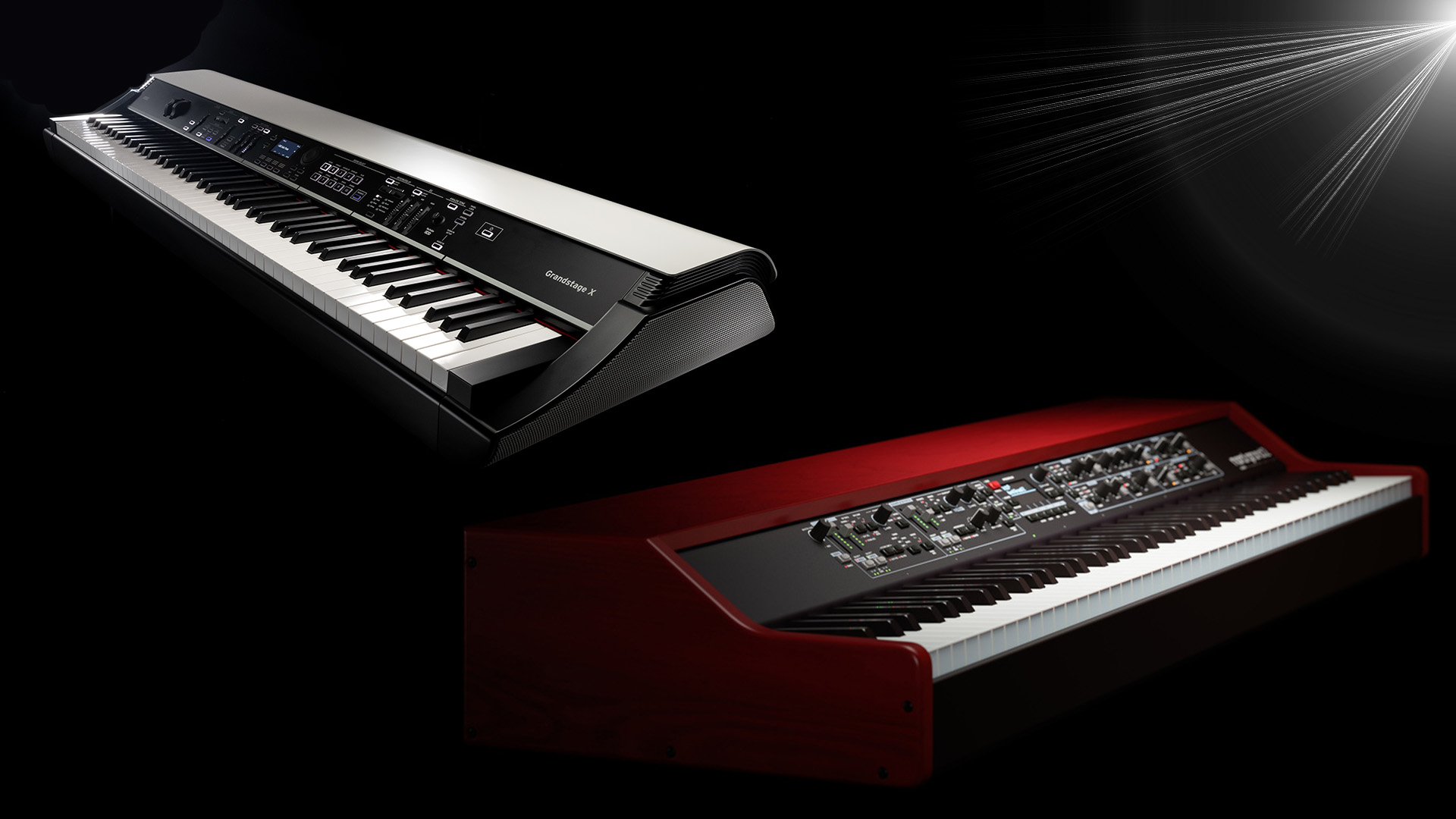
When I first got my hands on the Korg Grandstage X and Nord Grand 2, I knew this was going to be an interesting comparison. Both of these high-end stage pianos bring serious quality to the table, and while they share a lot in common—like fully weighted 88-key hammer-action keybeds and top-tier sound engines—they take very different approaches to how they deliver those features.
After spending time with both, I found myself leaning toward one in particular—not necessarily because it’s better outright, but because it offers the best balance of features, performance, and price. Let’s break it down.
Build & Design
Both pianos are built like tanks, so durability isn’t a concern with either. However, the way they look and feel is quite different.
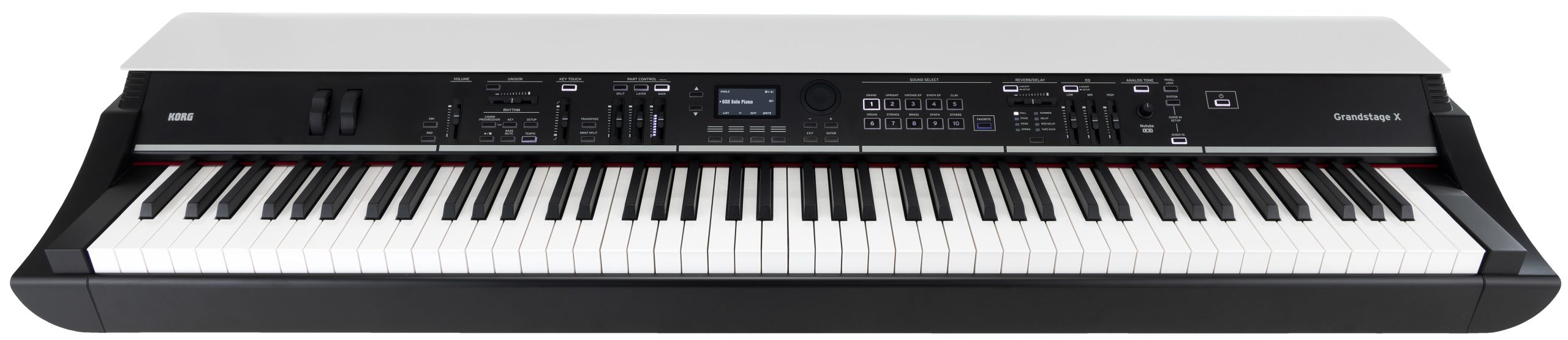
- The Grandstage X has a sleek, modern design with an all-aluminum chassis and a backlit interface that’s easy to see on a dark stage. It feels like something designed specifically for gigging musicians—functional, stylish, and straightforward.
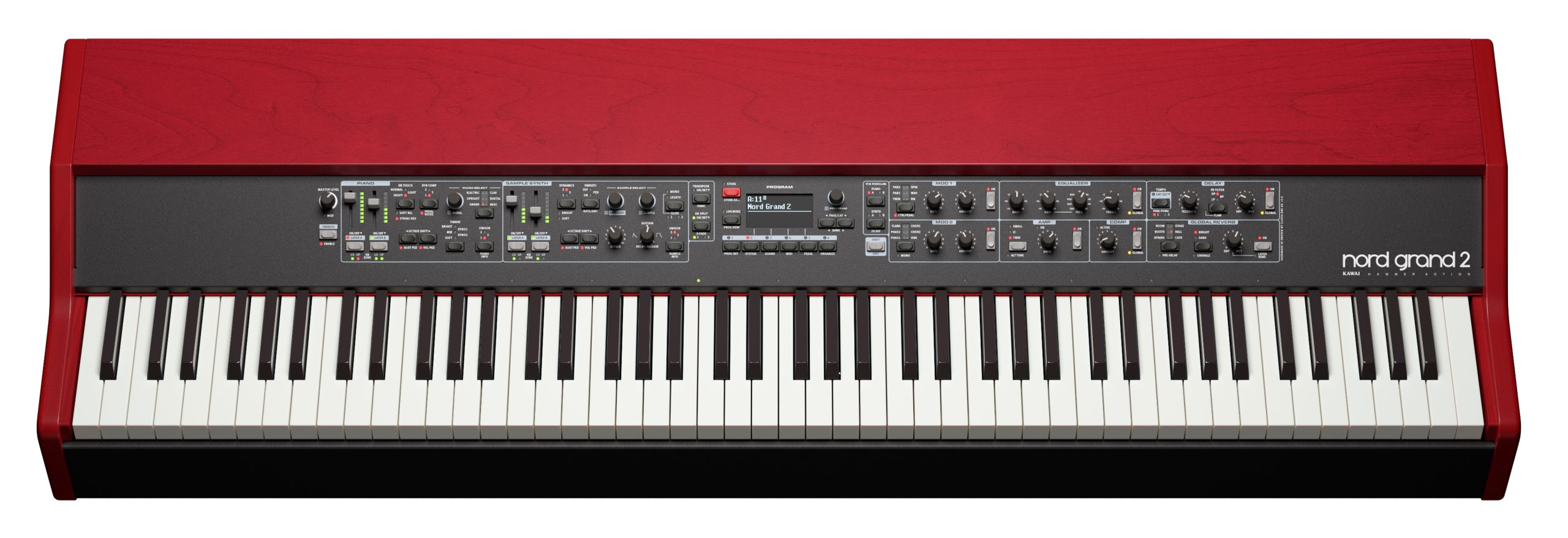
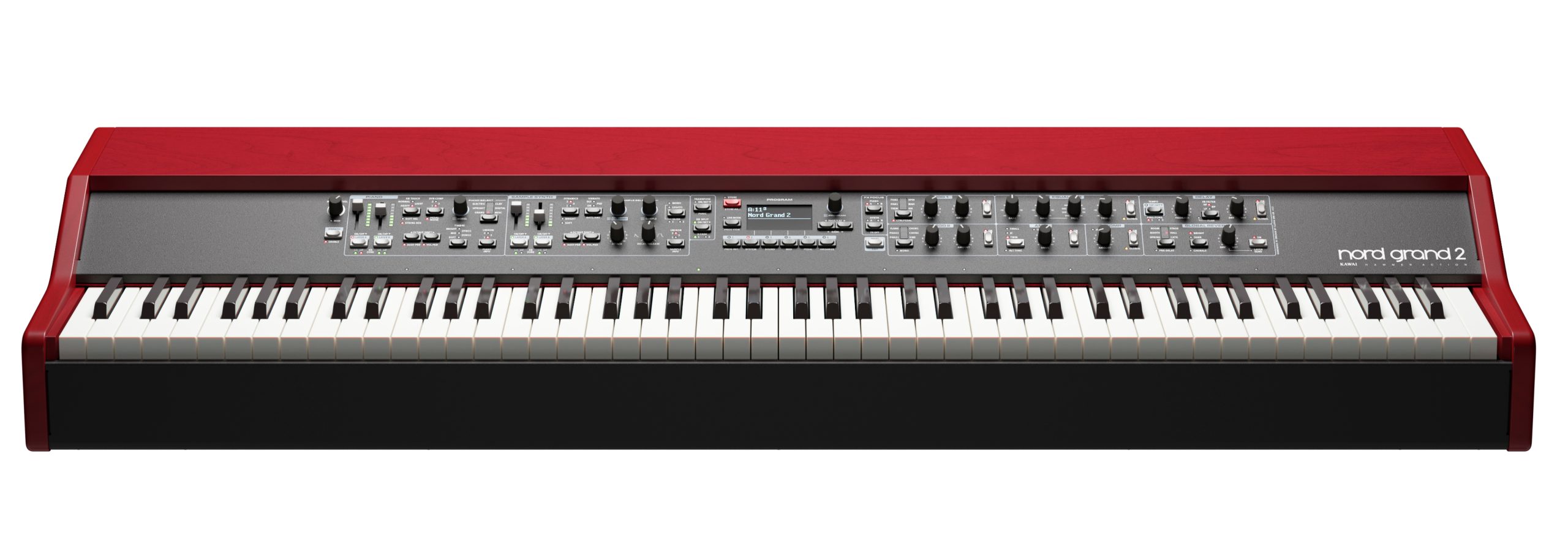
- The Nord Grand 2, on the other hand, has Nord’s signature red colorway with wooden side panels, giving it a more classic, piano-like appearance. The front panel is a bit busier, with a lot of dedicated controls at your fingertips.
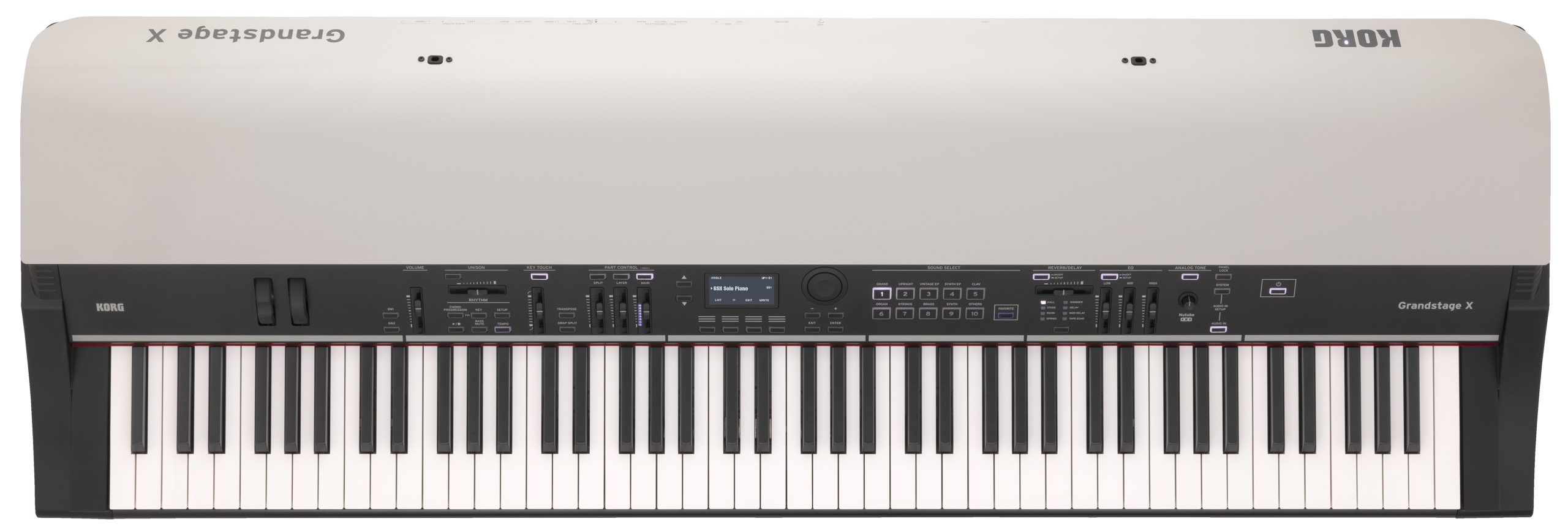
Personally, I found the Grandstage X a little more intuitive, since it’s more streamlined and easy to navigate during a live performance. The Nord’s hands-on control layout could be a plus if you like tweaking sounds in real-time, but for me, the Grandstage X felt more performance-friendly.
Key Action & Playability
Key action is probably the most personal factor when choosing a stage piano, and there’s no clear winner—just different preferences.
- The Korg Grandstage X uses Korg’s RH3 hammer-action keybed, which has a smooth, balanced feel. It’s responsive enough for fast passages while still feeling weighted and expressive for piano playing.
- The Nord Grand 2 features Kawai’s Responsive Hammer III action, which has a slightly heavier touch and a more pronounced bounce on key release.
When switching between the two, I found that the Grandstage X felt more adaptable—light enough for synth and electric piano playing, but still solid and expressive for acoustic piano parts. The Nord’s keybed felt a bit more grand piano-like in its response, but that difference wasn’t huge. Trying them both in person is really the best way to know which suits your playing style.
Sound Engines & Customization
This is where the biggest difference shows up.
- The Korg Grandstage X is powered by multiple dedicated sound engines, including separate engines for acoustic pianos, electric pianos, organs, and synths. That means you’re getting a wide variety of sounds, all custom-built for their specific purpose.
- The Nord Grand 2 relies on a dedicated piano engine and a sample synth section.
Nord has a great reputation for its piano sounds, and it’s easy to see why. Their detailed multi-sampling brings out a lot of nuance. That said, the Grandstage X covers more ground, since it doesn’t just excel at acoustic pianos—its electric pianos, strings, and synths are just as strong.
For someone like me who plays a range of styles, the Grandstage X felt more like a complete instrument, whereas the Nord Grand 2 felt more specialized toward traditional piano playing.

Usability & Interface
This comes down to how you like to interact with your instrument.
- The Grandstage X keeps things simple with quick-access buttons and an easy-to-read display. There’s not much menu diving, and everything feels designed for fast, efficient sound switching during a performance.
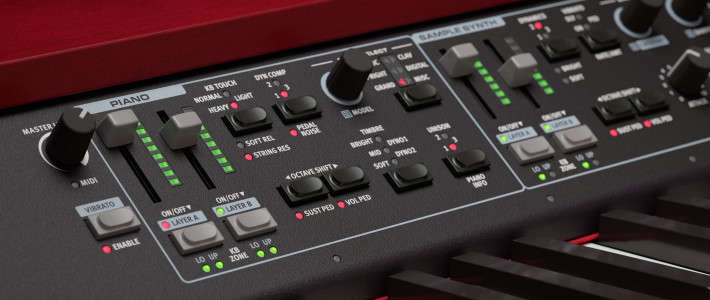
- The Nord Grand 2 has a knob-per-function approach, which means more hands-on control but also a busier interface.
I can see why some players would love Nord’s approach—if you like tweaking your tone on the fly, it gives you a lot of immediate control. But for me, the Grandstage X’s streamlined workflow made it easier to focus on playing rather than adjusting settings.
Connectivity & Features
In terms of I/O options, both pianos offer what you’d expect from a high-end stage piano, but the Grandstage X has a few extras that stood out.
- The Grandstage X includes balanced XLR outputs, a stereo input with its own gain control, and an SD card slot for loading additional sounds. This makes it a bit more flexible for live and studio use.
- The Nord Grand 2 has a monitor input and Nord’s triple pedal system, which adds some extra expression for piano playing.
One thing to note: Nord’s optional accessories—like the wooden stand and stereo monitors—are quite expensive. Korg’s optional stand is more affordable, and while there’s no built-in speaker system, that’s usually not a dealbreaker for stage pianos.
Price & Value
Both pianos are premium instruments, but the Grandstage X is priced more competitively while still delivering:
✔ A top-tier keybed
✔ Multiple dedicated sound engines
✔ A streamlined, live-friendly interface
✔ More connectivity options
The Nord Grand 2 costs more, and while its piano sounds and keybed are top-notch, it’s also more specialized. The Grandstage X, on the other hand, felt like the more complete package, offering a broader sound palette and a more flexible workflow at a better price point.
Final Verdict: Which One Would I Choose?
Why I’d Choose the Korg Grandstage X:
✅ A well-balanced mix of playability, usability, and sound variety
✅ Great for both piano-focused playing and multi-instrument performance
✅ More intuitive for live settings
✅ Better value for the price
Why Someone Might Prefer the Nord Grand 2:
🎵 If the absolute best acoustic piano realism is your #1 priority
🎛️ If you love having dedicated knobs for every function
🎹 If you’re already deep into the Nord ecosystem
At the end of the day, both are exceptional instruments, and it really comes down to how you play. For me, the Grandstage X just made more sense—it felt more versatile, easier to use in a live setting, and a better deal overall.
That’s my take—what’s yours? Let me know which one you’d pick! 🎹
